

Category: U.S. News
Reading Time: 8 Minutes
Author: MyJobHub Editorial Team
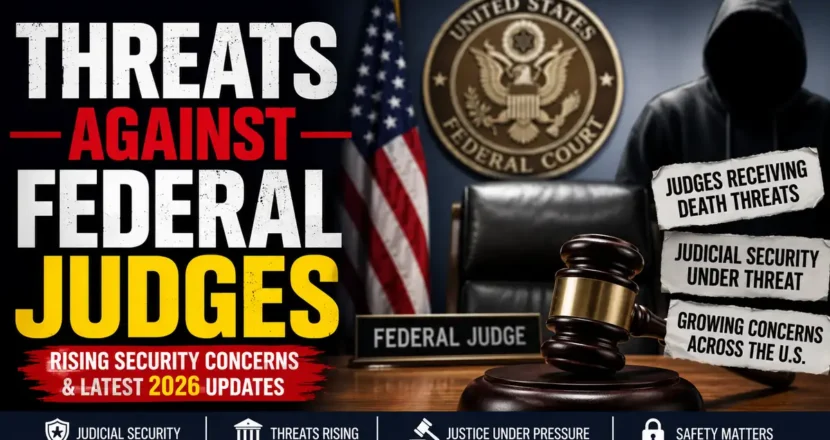
Threats Against Federal Judges have become one of the most significant concerns within the United States judicial system in recent years. Federal judges are responsible for deciding complex constitutional, criminal, and civil cases that often attract national attention. As political tensions and public scrutiny increase, many judges have reported facing threats, intimidation, and online harassment that raise serious concerns about judicial independence and public safety.
In 2026, conversations surrounding Threats Against Federal Judges continue to grow as lawmakers, court officials, and legal experts discuss stronger protections for members of the federal judiciary. Protecting judges is considered essential to maintaining a fair, impartial, and independent justice system.
📑 Table of Contents
Overview of Threats Against Federal Judges
The U.S. federal judiciary has experienced an increase in reported threats directed at judges over the past several years. These threats may include online harassment, threatening messages, and, in some cases, physical security concerns. Court officials have repeatedly emphasized that protecting judges allows them to make legal decisions without fear of intimidation or outside influence.
Experts note that judicial security has become an increasingly important topic because federal judges regularly oversee cases involving terrorism, organized crime, political disputes, corporate litigation, and other highly sensitive matters.
An independent judiciary depends on judges being able to perform their duties without threats, intimidation, or violence.
Why Are Federal Judges Facing More Threats?
Legal analysts believe several factors contribute to the increase in threats against members of the federal judiciary. Highly publicized court decisions, rapid information sharing through social media, and growing political polarization have all increased public attention toward judges and court proceedings.
While criticism of judicial decisions is protected under free speech, threats of violence or intimidation are criminal acts and are investigated by law enforcement agencies.
The United States Marshals Service is primarily responsible for protecting federal judges and securing federal courthouses across the country.
Judicial Security Measures
Federal officials continue to strengthen security measures designed to protect judges, courthouse employees, and their families. These protections include enhanced courthouse security, threat assessments, emergency response planning, cybersecurity improvements, and cooperation between federal law enforcement agencies.
The United States Marshals Service (USMS) plays a central role in protecting federal judges by investigating threats, monitoring potential risks, and coordinating security for high-profile court proceedings. Local law enforcement agencies may also assist when additional protection is required.
- Enhanced courthouse screening procedures
- 24/7 threat monitoring
- Cybersecurity protection for judges
- Emergency response planning
- Coordination with federal agencies
Government Response
Federal officials have repeatedly stated that threats against judges will be investigated and prosecuted when they violate federal law. Policymakers have also discussed additional funding for courthouse security and stronger protections for judges' personal information.
Legal organizations emphasize that protecting judges is essential for maintaining public confidence in the justice system. Judicial independence depends on judges being able to make decisions based solely on the law and evidence presented in court.
Public disagreement with a court ruling is protected by law in many circumstances, but threats, intimidation, or acts of violence directed at judges are criminal offenses and may result in serious legal consequences.
Why Judicial Independence Matters
The United States Constitution establishes an independent judiciary to ensure that legal disputes are decided fairly and without outside pressure. Security experts warn that attempts to intimidate judges could undermine public trust in the legal system and discourage fair decision-making.
Many legal scholars believe continued investment in judicial security, education, and public awareness will help reduce risks while preserving transparency and accountability within the federal court system.
Future Challenges
As technology continues to evolve, federal agencies face new challenges related to online threats, cyber harassment, and the rapid spread of misinformation. Security experts expect future judicial protection strategies to include stronger digital monitoring, improved cybersecurity, and closer cooperation between federal and local law enforcement.
Maintaining the safety of judges while protecting transparency, public access to court proceedings, and constitutional rights will remain an important priority for the U.S. justice system.
Threats Against Federal Judges remain a serious concern across the United States as officials continue working to strengthen judicial security and protect the independence of the courts. Reports of intimidation, online harassment, and threats directed at members of the federal judiciary have increased attention on courthouse safety and law enforcement efforts. Experts emphasize that addressing Threats Against Federal Judges is essential for preserving public confidence in the justice system, ensuring judges can make decisions without fear, and maintaining the rule of law. As new security measures are introduced, discussions about protecting judges, court staff, and their families are expected to remain an important national priority throughout 2026.
Frequently Asked Questions
What are threats against federal judges?
Threats against federal judges include intimidation, harassment, online abuse, or threats of violence directed toward judges because of their official judicial responsibilities.
Who protects federal judges in the United States?
The United States Marshals Service (USMS) is the primary federal agency responsible for protecting federal judges, federal courthouses, and members of the judiciary.
Why has judicial security become a major issue?
Increasing public attention, online harassment, and high-profile court cases have raised concerns about protecting judges and ensuring judicial independence.
Are threats against judges illegal?
Yes. Threatening or attempting to intimidate judges may violate federal or state laws and can result in criminal prosecution.
Why is judicial independence important?
Judicial independence allows judges to decide cases fairly based on the law without political pressure, intimidation, or fear.
Conclusion
Threats Against Federal Judges continue to raise serious concerns for the United States justice system. Federal judges play an essential role in interpreting the Constitution, protecting individual rights, and resolving legal disputes fairly. Strengthening courthouse security, improving cybersecurity, and prosecuting unlawful threats remain important priorities for maintaining judicial independence and public confidence in the courts.
Suggested Tags
Threats Against Federal Judges, Federal Judges, Judicial Security, United States Courts, US Marshals Service, Federal Judiciary, Court Security, Legal News, USA News, 2026